Wright Plastic Surgery and Med Spa: Dr. Eric Wright 1811 Rahling Rd, Suite 100
Little Rock, AR 72223 Phone: (501) 575-0088 Monday-Thursday: 8:30 a.m.–4:30 p.m. Friday: 8:30 a.m.–1:30 p.m.
Breast augmentation adds fullness to breasts that are naturally small or have lost volume after pregnancy, breastfeeding, or weight loss. Board-certified plastic surgeon Dr. Eric Wright offers the latest silicone or saline implants or natural breast augmentation with fat transfer for a subtle size increase. His refined expertise in breast surgery emanated from an aesthetic and reconstructive breast surgery fellowship at Massachusetts General Hospital, a principal teaching hospital of Harvard Medical School, and a 6-year plastic surgery residency at Stanford University Hospital. Dr. Wright’s evidence-based rapid recovery techniques help many of his breast augmentation patients in Little Rock return to their everyday activities within about a week.
Breast Augmentation Before & After Photos
This gallery contains images intended for adult audiences.
Breast augmentation enhances the size, shape, and proportion of breasts in a way that feels natural and balanced. It may be performed to:
Increase breast volume
Improve breast symmetry
Restore fullness after pregnancy, breastfeeding, or weight loss
Enhance overall body proportion
Breast augmentation can create subtle or more noticeable changes depending on your preferences and surgical plan.
Model
About Dr. Wright
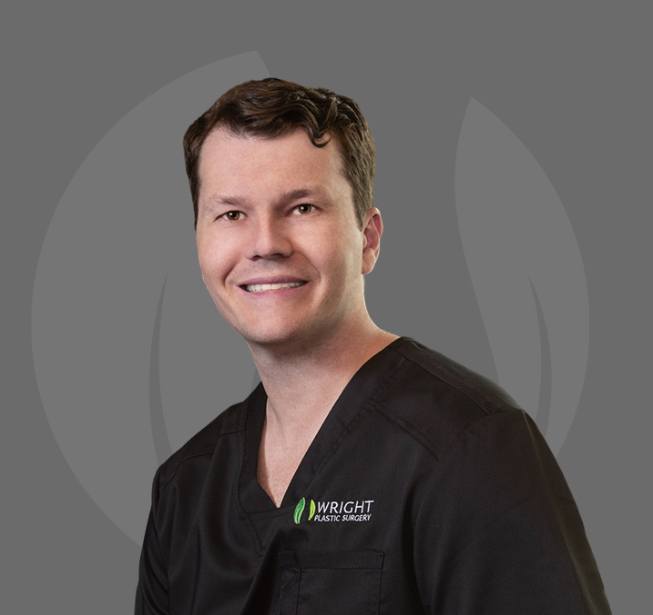
An Arkansas native, board-certified plastic surgeon Dr. Eric Wright has spent over a decade helping Little Rock women and men look and feel their best with both reconstructive and plastic surgery options.
How much does breast augmentation cost in Little Rock, AR?
The cost for breast augmentation varies with the specifics of your procedure, including surgical technique and choice of implants. Dr. Wright will discuss all your options during your consultation and then provide you with a personalized quote. Learn more about the factors that affect breast augmentation prices.
Financing Your Breast Augmentation
We offer a variety of financing and payment plan options to fit a range of budgets. Whether you’re interested in low monthly payments or flexible terms, our team can help you find a plan that works for you. We’re committed to making your journey as smooth and stress-free as possible—so you can focus on feeling confident and excited about your transformation.
“My experience with Dr. Wright has been absolutely exceptional. I had an explant and re-augmentation, transitioning from over-the-muscle to under-the-muscle implants. It was a very complex surgery, and Dr. Wright’s attention to detail and precision were evident every step of the way. He is a truly fantastic surgeon who genuinely cares about his patients.”
Optimistic10 RealSelf
Model
Who is an ideal breast augmentation candidate?
You may be a strong candidate for breast augmentation if you:
Are in good health
Have realistic expectations about what surgery can achieve
Do not smoke or are willing to stop before and after surgery
Are not pregnant or breastfeeding and do not intend to become pregnant in the near future
Are prepared to spend time taking it easy during recovery
During an in-depth consultation, Dr. Wright will help you determine whether breast augmentation matches your unique needs and cosmetic goals.
Choosing Breast Implants
Choosing the right breast implants is one of the most important steps in achieving flattering, natural-looking results. Factors such as implant material, size, profile, and placement all influence your final shape and overall balance.
Silicone vs. Saline
Implants are filled with either saline (saltwater) or cohesive silicone gel. While each type has its own unique benefits, most patients today choose silicone because it creates a more natural look and feel.
Implant Size
Choosing your implant size is one of the most exciting parts of breast augmentation. Our team will take your measurements and help you choose a size that complements your frame, suits your lifestyle, and achieves a natural-looking result.
Implant Profile
Also known as projection, the profile of your implant describes how far it protrudes from your chest. High-profile implants are more dramatic and noticeable, while low-profile implants are more subtle. Most implants come in these profiles:
Low: Protrudes the least and is wide at the base. This option is best if you have a wide chest.
Medium: Protrudes a moderate amount with a moderate-width base. This profile increases overall fullness and is the most popular choice.
High: Protrudes the farthest and has the narrowest base.
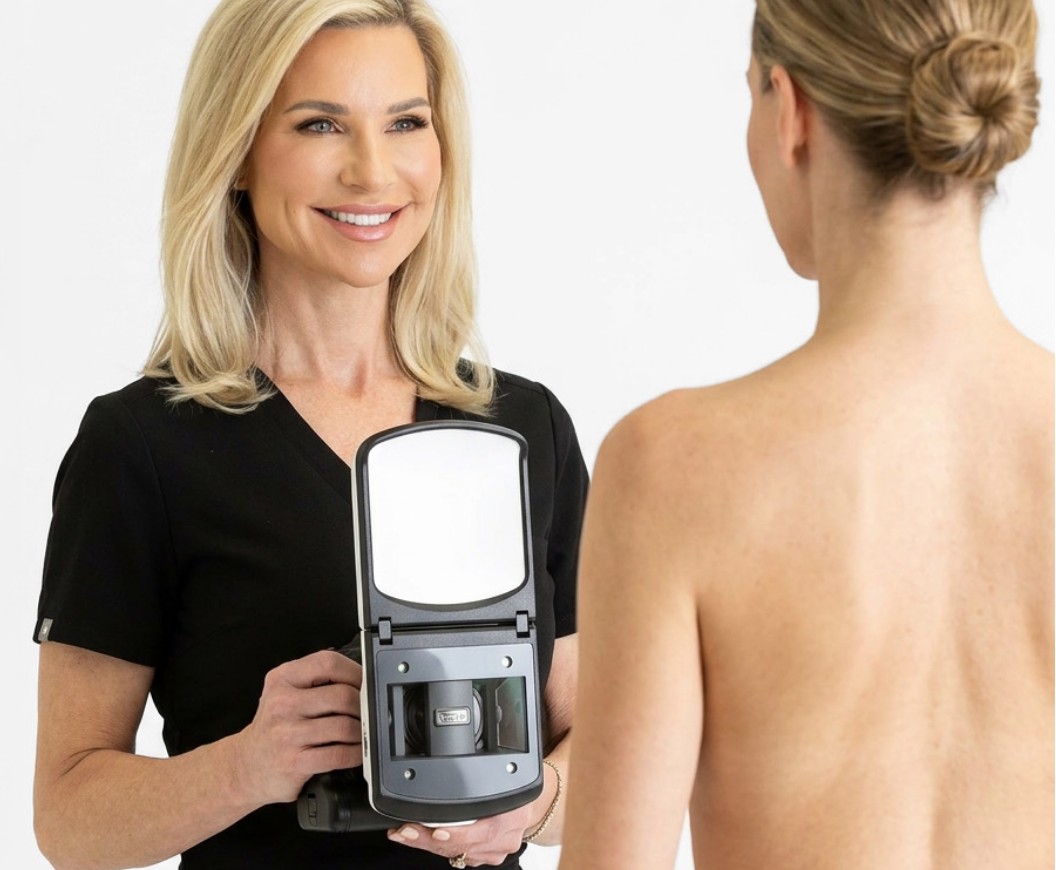
Vectra® H2 3D Imaging System
Get a sneak peek of how your results might look with our three-dimensional imaging system. Patients appreciate these realistic views of how they may look with different sizes of breast implants. With Vectra H2 3D, you can have confidence in the outcome of your breast augmentation. Learn more about Vectra 3D.
What happens during breast augmentation surgery?
Breast augmentation is typically performed as an outpatient procedure under general anesthesia. The procedure generally takes 1 to 2 hours, and you’ll return home the same day with detailed recovery instructions.
Key Steps
Incision placement: Dr. Wright typically makes an incision along the breast crease where it attaches to the chest, called an inframammary incision. Another option is along the lower edge of the areola, called a periareolar incision. Dr. Wright will discuss the benefits of each option during your consultation.
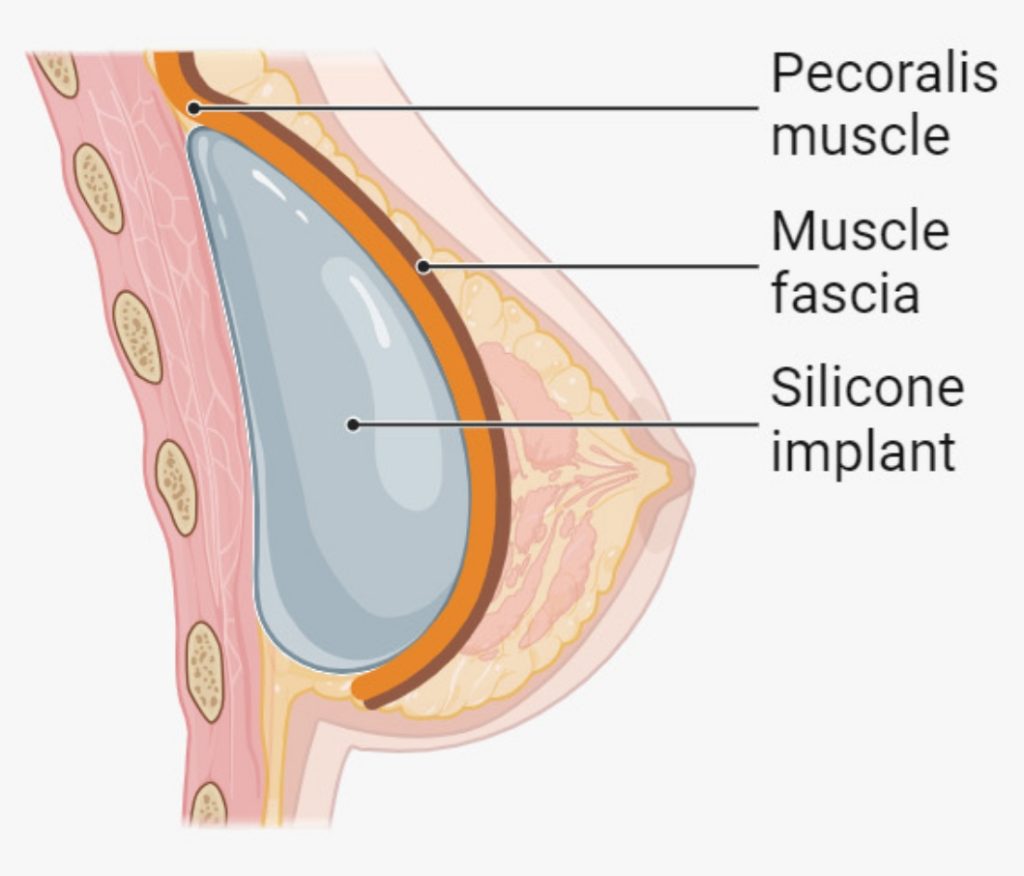
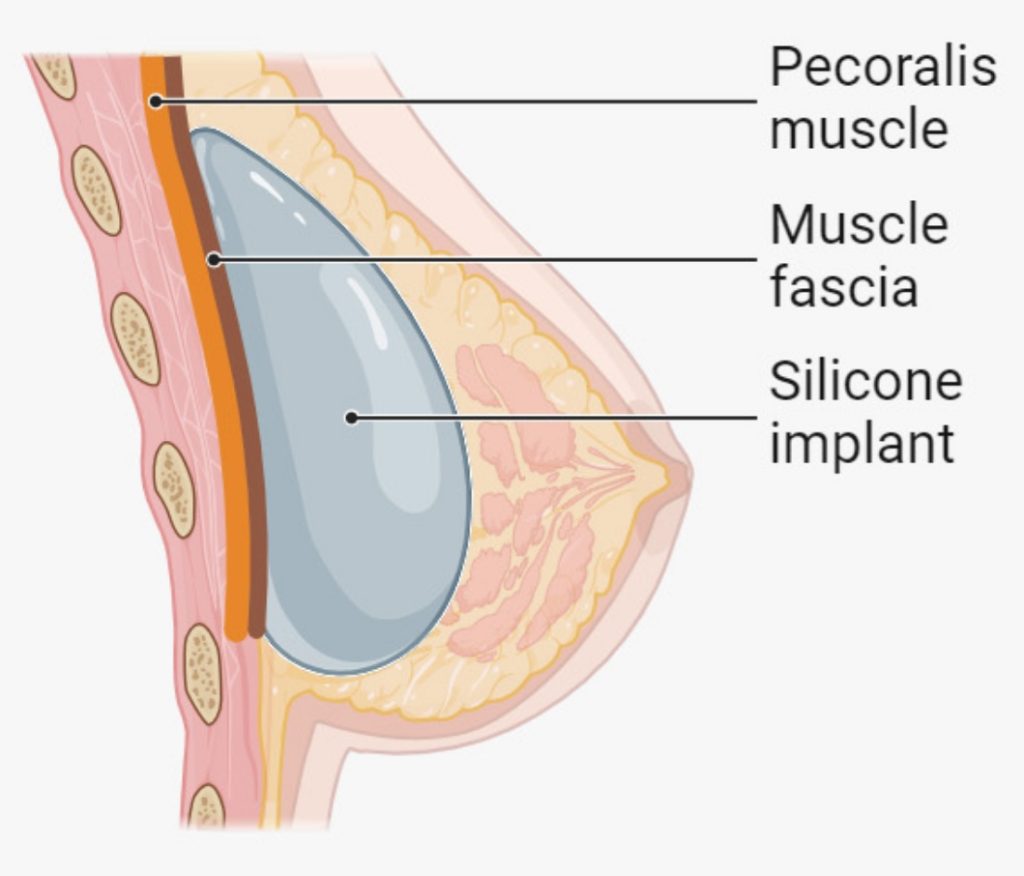
Implant placement: During the procedure, Dr. Wright creates a pocket for the implant. Depending on your anatomy and goals, he uses 1 of 3 options. He may place the implant directly behind the existing breast tissue, but in front of the pectoral muscle (subglandular) or behind the pectoral muscle (submuscular). Submuscular is the most common choice because it usually looks and feels more natural.
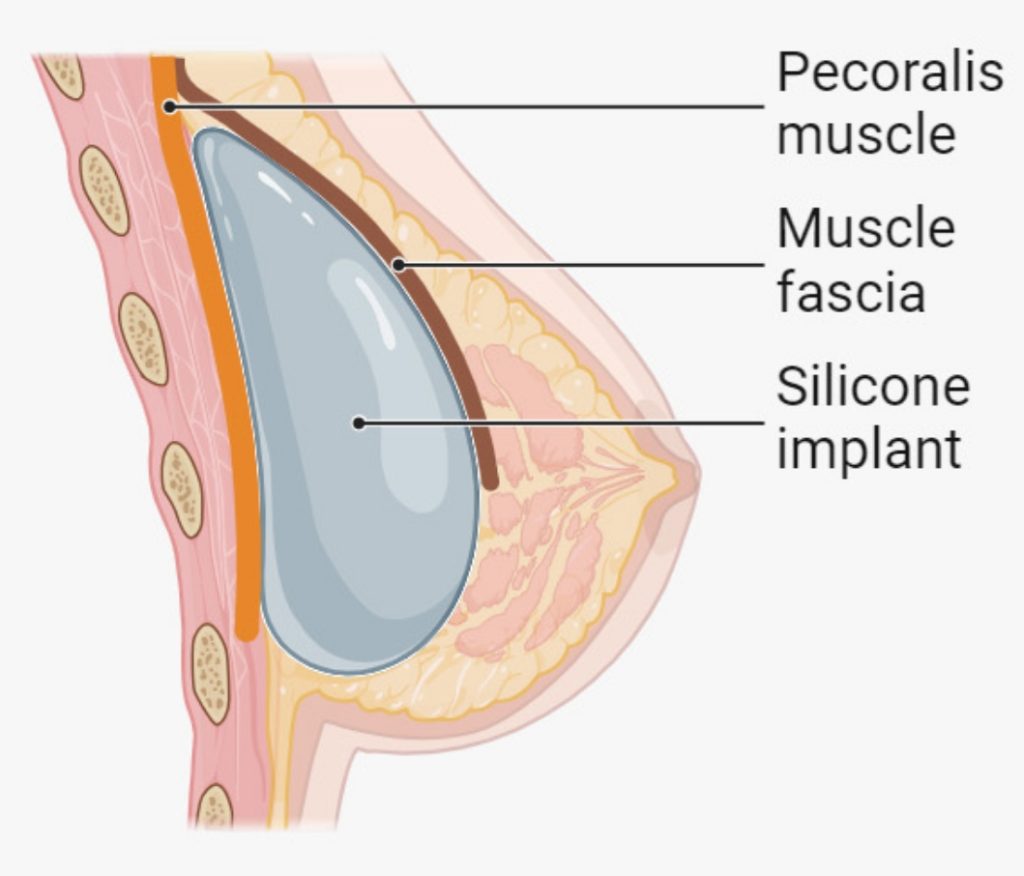
The third option, subfascial placement, is appropriate for select patients. Using this technique, the chest muscle remains untouched and uncut. Essentially, the fascia – which is the overlying soft tissue of the pectoralis muscle – is gently lifted over the muscle to create a space between the fascia and the muscle. An implant is then inserted between the muscle and the fascia.
Breast Implant Placement Options
Submuscular Implant fully under pectoralis muscle
Subglandular Implant on top of pectoralis muscle
Subfascial Implant under muscle fascia, but over muscle
Fat Transfer Breast Augmentation
For patients who prefer a natural approach to breast enhancement, fat transfer breast augmentation offers an alternative to breast implants. This technique uses fat to add subtle volume, improve contour, and enhance symmetry while maintaining a soft, natural feel. Dr. Wright’s advanced fellowship training in aesthetic and reconstructive breast surgery at Harvard-affiliated Massachusetts General Hospital informs his personalized approach to helping patients achieve natural-looking breast enhancement.
Autologous Fat Transfer
With autologous fat transfer, Dr. Wright uses liposuction to remove excess fat from areas such as the abdomen, flanks, or thighs. The fat is then purified and strategically injected into the breasts to create balanced, natural-looking fullness. Because the transferred tissue comes from your own body, this method avoids implants and may also provide the added benefit of body contouring in the donor area.
The fat transfer technique is best suited for patients seeking a modest increase in size rather than a dramatic change. Final results develop gradually as the transferred fat integrates with your natural tissue.
alloClae™ Structural Adipose Filler
In select cases, Dr. Wright may offer alloClae structural adipose filler, a biologic material derived from processed donor fat tissue. It contains purified adipose tissue components, including extracellular matrix (ECM), collagen, and growth factors. This implant-free approach can be used to refine breast shape, address asymmetry, or enhance upper pole fullness.
During your consultation, Dr. Wright will evaluate your anatomy, skin quality, and goals to determine whether autologous fat transfer, alloClae™, or traditional implant-based augmentation is the best option for achieving natural-looking, confidence-enhancing results.
Breast Augmentation vs. Breast Lift
Breast augmentation increases breast volume using implants or fat transfer, making it ideal for patients who want fuller breasts or improved symmetry. A breast lift reshapes and elevates sagging breasts by removing excess skin and repositioning the nipple without significantly increasing size. If you have both volume loss and drooping, Dr. Wright may recommend combining the procedures to restore balanced, youthful proportions.
Model
Can breast augmentation be combined with other procedures?
Yes, many patients combine breast augmentation with other body contouring procedures as part of a mommy makeover. These procedures include:
Breast implant revision surgery may be performed after the initial breast augmentation surgery for a variety of reasons, including:
Correcting a complication such as capsular contracture
Improving unsatisfactory results
Exchanging breast implants for a different type or size
Removing breast implants without replacing them, called explant surgery
Dr. Wright believes it’s important for patients to feel comfortable and confident after breast enhancement surgery. He supports patients in whatever decision they make and has the experience needed to provide optimal results with revision surgery.
Internal Bra Technique for Breast Revision
Drawing on his training in aesthetic and reconstructive breast surgery at Harvard Medical School, Dr. Wright may use an internal bra technique in select cases to provide additional support to the breast pocket. This approach involves inserting a soft biologic or mesh-based scaffold to reinforce weakened tissue and help maintain implant position over time.
Internal bra support may be recommended for patients with stretched skin, implant bottoming out, or recurrent sagging after prior surgery. The goal is to improve structural support and long-term stability while preserving a natural-looking contour.
Risks of Breast Augmentation Surgery
All surgical procedures carry some risk. Some of the more common potential risks associated with breast augmentation include:
Infection or bleeding
Capsular contracture
Implant rupture or displacement
Changes in nipple sensation
Choosing a board-certified plastic surgeon and following postoperative instructions significantly reduces risk.
Breast Augmentation Rapid Recovery
To improve your comfort after surgery and reduce downtime, Dr. Wright incorporates evidence-based rapid recovery techniques.
These protocols may include:
Precise, muscle-sparing surgical technique to reduce tissue trauma
Long-acting local anesthetics administered during surgery for extended pain control
Minimized use of narcotics, when appropriate
Careful implant pocket creation to limit bleeding and swelling
Gentle arm movement early on to reduce stiffness
Detailed at-home recovery instructions to support safe healing
Close postoperative follow-up to monitor progress
These steps are designed to enhance comfort, support faster healing, and deliver natural-looking results with a smoother recovery experience.
Model
What Is Breast Augmentation Recovery Like?
Most breast augmentation patients return to work, school, and nonstrenuous activities in about 5 to 7 days. However, recovery depends on several factors, including implant placement, implant size, and incision location. Here is a general idea of what you can expect:
Pain: Most patients experience minor soreness and swelling following surgery. Prescription medication is enough to keep most patients comfortable for the first 5 to 7 days when discomfort is most intense.
Return to work: Patients typically are ready to return to work and school within a week of surgery.
Compression garment: If fat grafting is performed, you may need to wear compression garments to minimize swelling in areas where liposuction was used to harvest fat.
Resume exercise: Strenuous exercise and more intensive movements, such as reaching, lifting, or high-impact exercise, should be postponed for 4 to 6 weeks.
Drop and fluff: The breasts may be high on the chest and tight for about 3 months until swelling diminishes and tissues relax, allowing the implants to “drop and fluff.”
Scarring: Dr. Wright places the incisions along the breast crease where the breasts and clothing cover the resulting scars. The incisions usually become a thin, faint scar within about a year.
Recovery varies based on implant type and placement, but most patients can expect:
First few days
Swelling, tightness, and mild discomfort
Over-the-counter pain management
Limited arm movement
1 week
Return to desk work and light activities
Follow-up appointment with Dr. Wright
4–6 weeks
Gradual return to exercise and lifting
Continued softening and settling of implants
Full results develop over several months as swelling resolves.
Breast Augmentation FAQ
Will breast augmentation look natural?
Dr. Wright uses his expertise and experience to focus on results that look and feel very natural. Implant selection and placement are key.
What are ‘yoga boobs?’
Yoga boobs, sometimes called “ballerina boobs,” describe the preference for smaller breast enhancement that complements an active lifestyle. Patients who choose this look typically select moderate implant sizes that enhance shape and proportion without creating dramatic volume.
What is the 45-55 breast rule?
The 45-55 rule is a ratio that suggests an attractive breast shape has about 45% of its volume or fullness in the upper pole (above the nipple) and 55% in the lower pole (below the nipple).
How much do breast implants weigh?
A typical breast implant of 300 to 400 cc weighs about 0.7 to 0.9 pounds. Patients usually do not notice much difference on the scale.
Can you breastfeed with implants?
Yes, many women are able to breastfeed with implants, as implants do not typically interfere with milk production. However, some women—whether they have implants or not—may have difficulty breastfeeding. If you plan to breastfeed in the future, let Dr. Wright know so he can plan your surgery accordingly.
Can you get a mammogram with breast implants?
Yes. Mammograms are safe and important for women with breast implants. The implant’s elastic outer shells can withstand much more compression than is used during a mammogram. Imaging centers routinely ask about implants when scheduling a screening.
How long do breast implants last?
Breast implants typically last 15 to 20 years or longer, though they are not considered lifetime devices. If you are not experiencing complications and are satisfied with your results, replacement may not be necessary.
Model
Request Your Consultation
Women travel from across the state of Arkansas and beyond to have Dr. Wright perform their breast augmentation procedure. If you would like to learn more about breast enhancement, request a consultation using our online form, or call our Little Rock, AR, practice.