

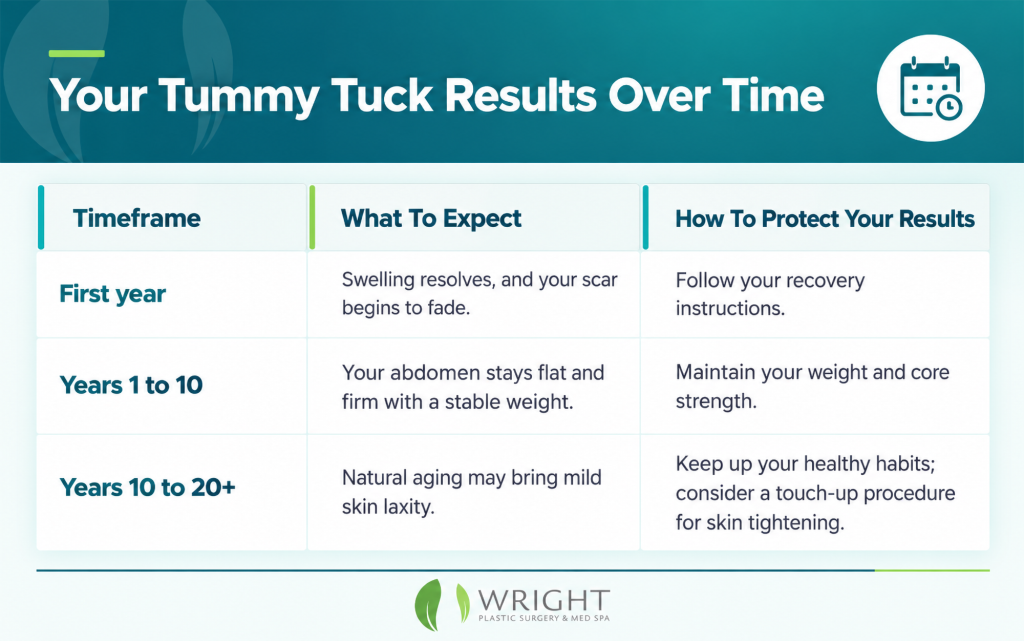
For most patients, a tummy tuck can last for decades without the need for future procedures. While weight changes, pregnancy, and the passage of time can all affect your results, you have more control over how long—and how well—your tummy tuck holds up than you might think.


Are Tummy Tuck Results Permanent?
The core changes of a tummy tuck are permanent, but that doesn’t mean your abdomen becomes frozen in time. The excess skin is gone for good, and any fat cells removed with liposuction will not grow back. Muscle tightening during diastasis recti repair is typically long-lasting, but it is not guaranteed to be permanent without proper care.
What Can Affect How Long Your Results Last?
Major fluctuations in weight, pregnancy, and the natural aging process can all affect your tummy tuck longevity.
- Weight changes: A significant increase in weight can stretch the skin and muscle wall, while substantial weight loss can leave behind new skin laxity.
- Pregnancy: Getting pregnant after a tummy tuck can compound these effects, often leading to re-separation of the abdominal muscles and the need for a second procedure. I typically recommend waiting until your family is complete before pursuing tummy tuck surgery.
- Aging: Over time, the skin gradually loses its elasticity, so some softening in your 50s, 60s, and beyond is natural. This process happens slowly, and most patients still have a far flatter and firmer abdomen than they did before getting surgery.
How Can You Protect Your Tummy Tuck Results?
Protecting your investment in a tummy tuck starts with good habits during your recovery. Wearing your compression garment as directed helps your skin settle smoothly over your new contours, while proper incision care minimizes scarring. Some patients also add lymphatic drainage massage to help swelling resolve faster.
Gradually easing into exercise as directed is also crucial. You will need to give your muscles time to heal, so be patient and wait until you get the all-clear to resume more strenuous workouts.
In the coming months and years, the best way to extend your results is to keep your weight stable, build your core strength through exercise, and continue to look after your incision line as it heals and fades.
What If Your Results Change Over Time?
Small changes rarely call for another tummy tuck. Fat removed during a tummy tuck doesn’t regenerate, but if the remaining fat cells enlarge and form a new pocket of fullness, liposuction can touch up your results.
For mild skin laxity that may develop, Renuvion® is a less-invasive option that uses radiofrequency (RF) energy and helium gas to tighten the skin. I typically reserve revision tummy tuck surgery for more significant contour changes.
Take the Next Step
Lasting tummy tuck results start with the right plan. To explore your body contouring options with an experienced board-certified plastic surgeon, request a consultation or call Wright Plastic Surgery at (501) 575-0088 to get started.
Leave a Reply